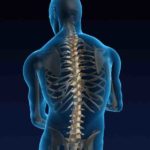
Some principles about low back pain
Key Points
- Low back pain is a symptom that includes many pathologies.
- The spine is a collection of many structures that can all give rise to different diseases.
- For the same symptom we must find the personalized treatment that suits it.
- There is no direct relationship between the intensity of the pain and the severity of the disease.
Low back pain is not a disease but is a term that defines a symptom (a sensation) of pain in the lower back regardless of its origin and severity.
Multiple structures, circumstances and mechanisms can cause pain, which can make diagnosis and treatment particularly difficult.
It is important to note that the intensity of the pain is not related to the severity of the cause, a simple muscle stretch can be much more painful than a hernia.
The spine is a complex structure composed of :
- Soft tissues: muscles, tendons and ligaments, meninges.
- bone: the vertebrae…
- Joints :
- Disc:
- Anulus: Outer part of the disc; it is the fibrous structure that holds the disc in place.
- Nucleus: central part of the disc; it is a gelatinous structure.
- Articular facets.
- Nerve structures :
- Spinal cord.
- Nerve.
The column has three main functions:
- -Structural: It supports the body like the pillars of a building.
- -Mobility* : The column is a stack of bony cylinders (the vertebra) articulated to each other each time** by a disc and 2 articular facets.
- -Protection : very schematically the column is a bone cylinder protecting nerve structures.
Each of these structures has its own weaknesses and its own pathologies that must be treated according to its specificities. Preserving or restoring each of the functions of the spine requires specific strategies.
* there is no mobility in the sacrum or coxies.
** the articulation between C1 and C2 follows a specific pattern